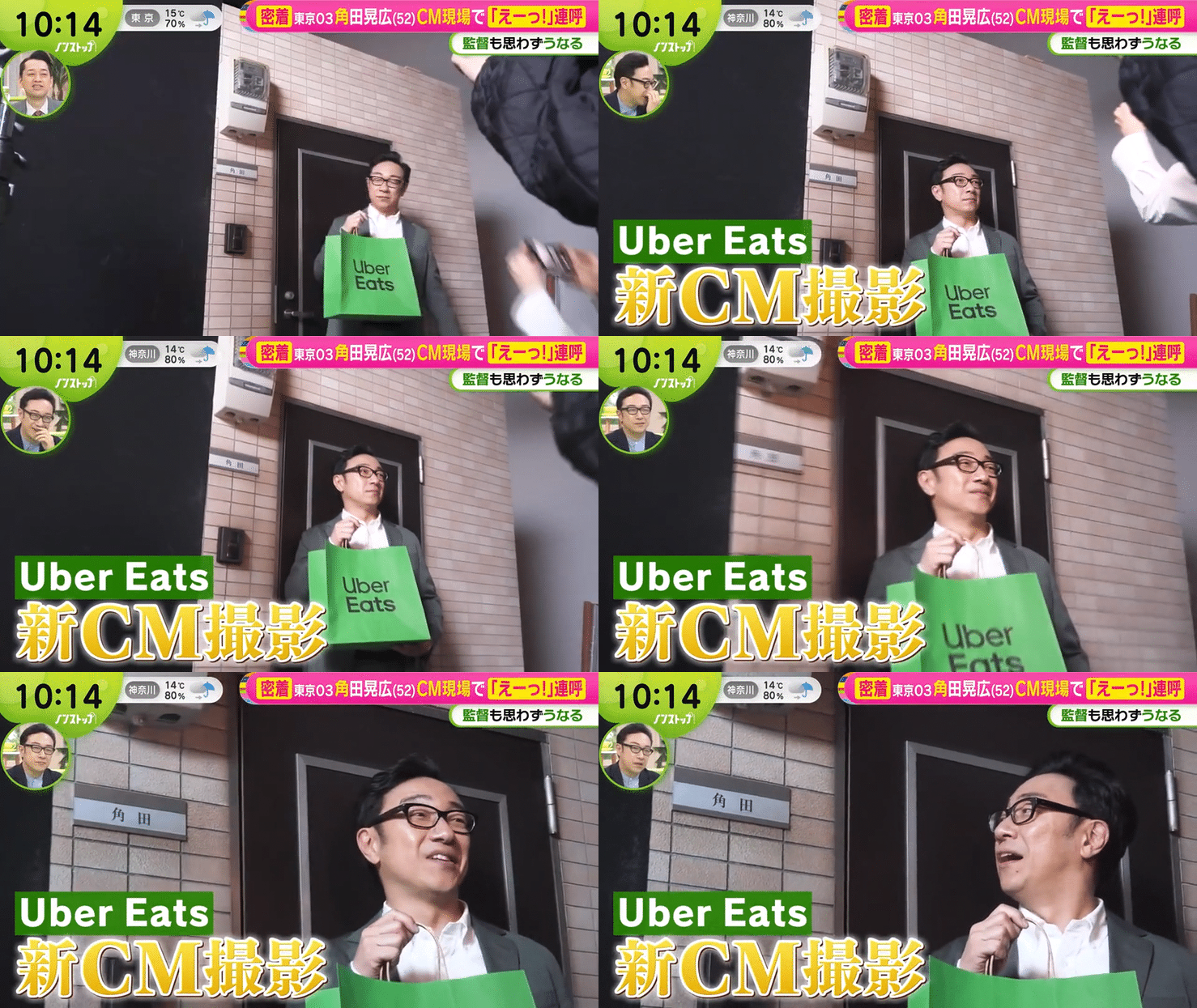
Uber Eats Japan: Value
Global strategy → Reframed for everyday Japanese behavior
Same Price. Different Decision
Problem
Delivery in Japan isn’t a bad option.
It’s just not the default.
People assume it costs more than going themselves.
So even when it makes sense,
they don’t choose it.
Solution
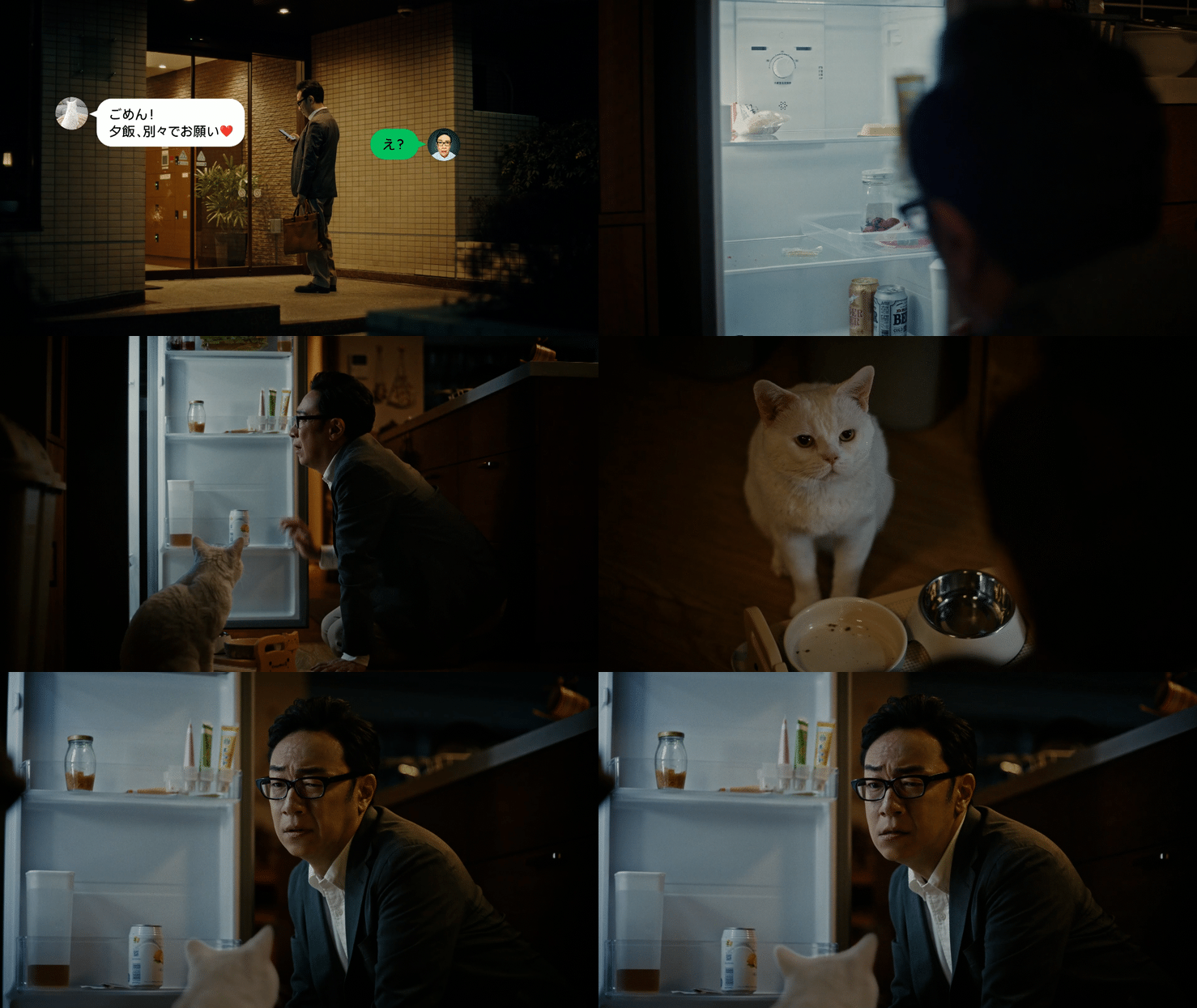
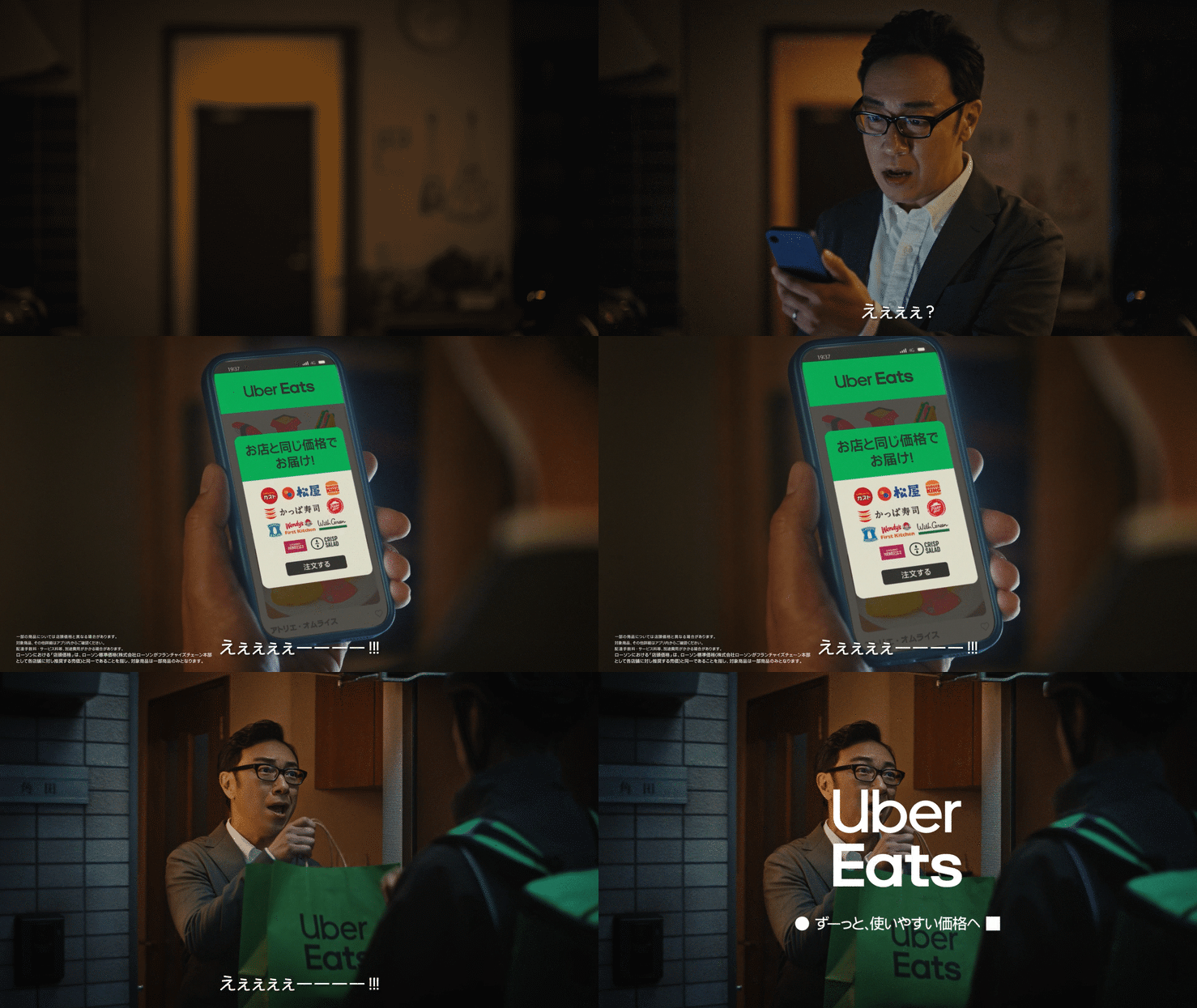
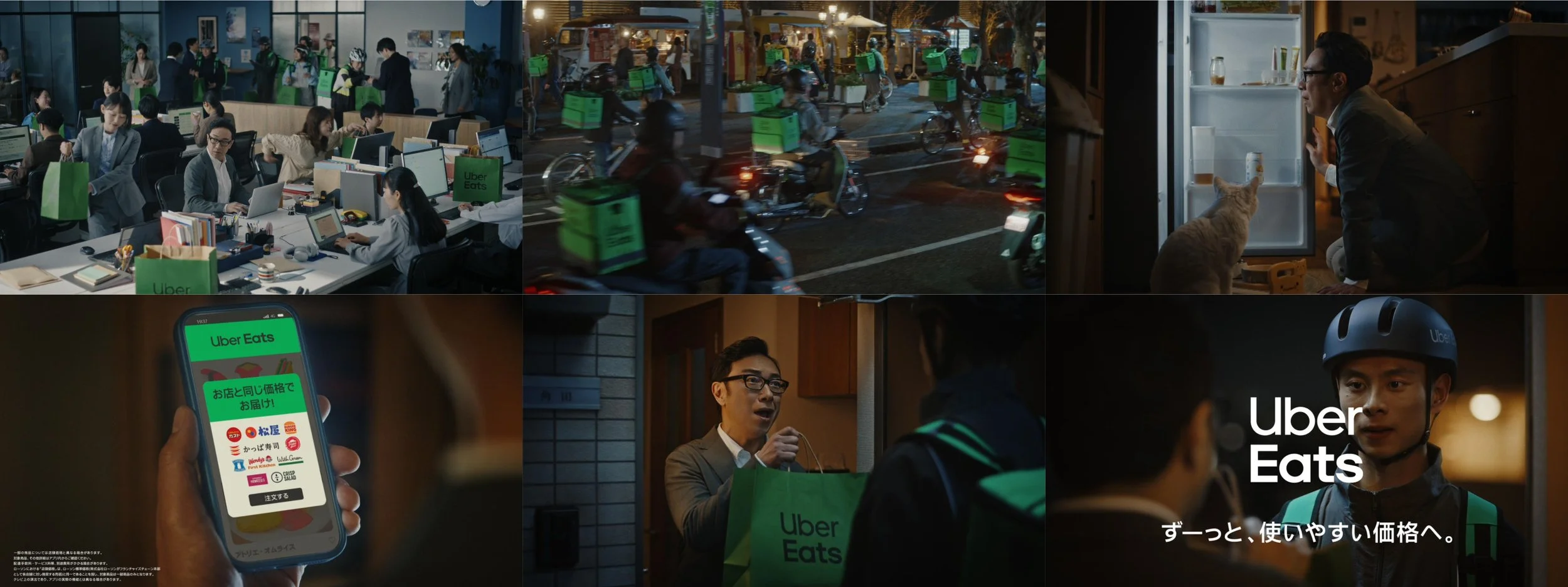
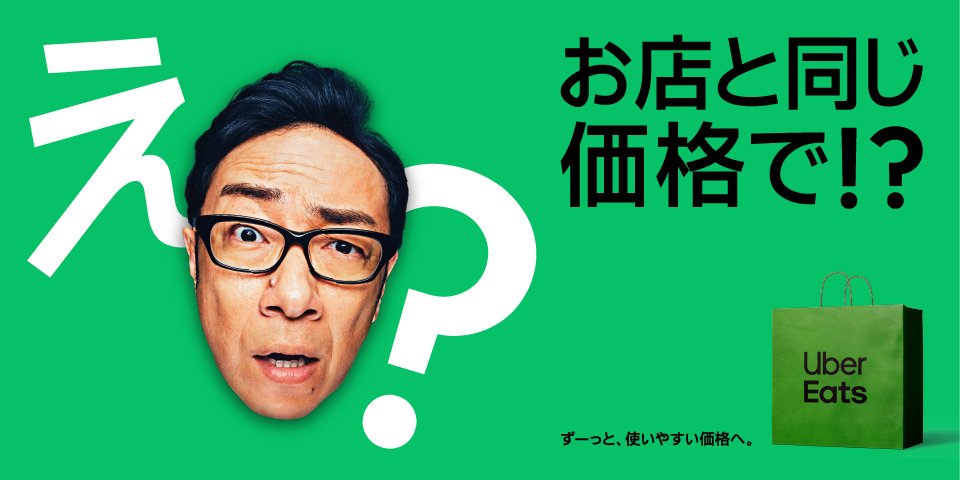
We didn’t make Uber Eats feel cheaper. We removed the trade-off. By introducing same-price menus as in-store, we eliminated the reason to go out in the first place. No comparison. No justification. If the price is the same, leaving no longer makes sense. Instead of explaining the change, we focused on the moment people realize it. A single reaction, “え?”, repeated across everyday situations. Because when a category assumption breaks, you don’t process it. You feel it.
Results
Established price parity at scale (18,000+ stores), removing the biggest barrier to everyday usage
Repositioned delivery from “extra cost” to “default option”
Embedded the offer across subscription (Uber One) and ecosystem (Rakuten) to drive repeat behavior
Uber Eats Value: Eh? :30

TVC :15
TVC :06
Uber Eats Value Visuals and OOHs
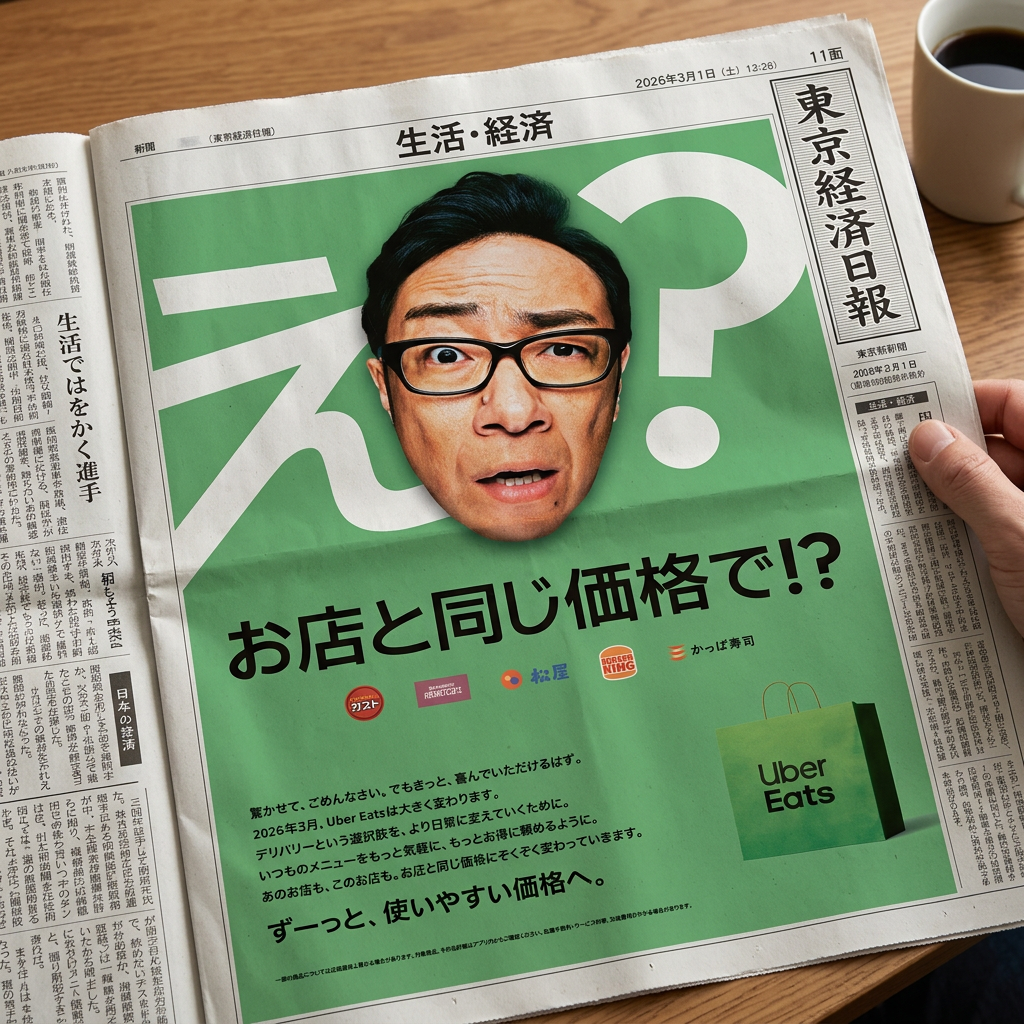
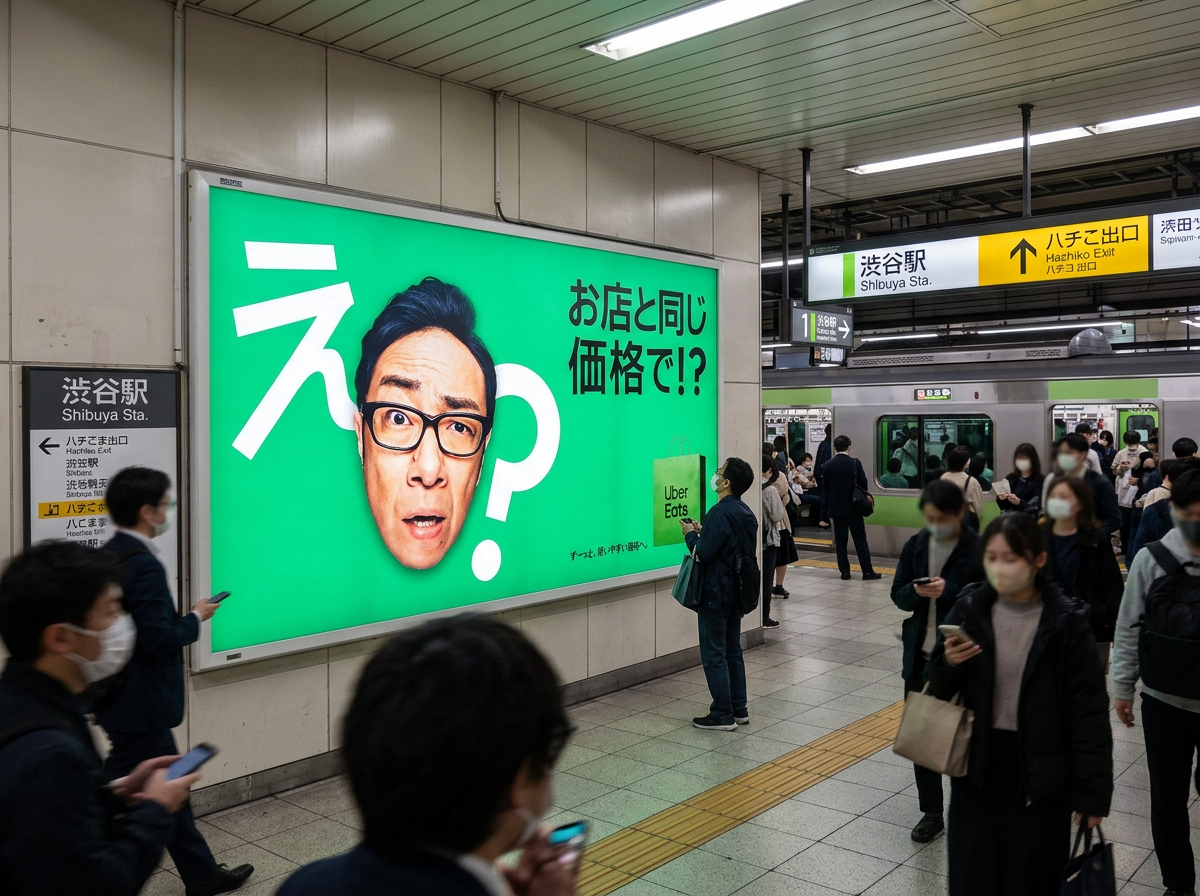
We extended the idea into the real world through a layered rollout. The hero creative appeared at scale across high-impact OOH and major newspaper placements, making the message unavoidable in everyday life. At the same time, we drove deeper relevance through merchant partnerships with brands like Matsuya, Seijo Ishii, Burger King, and Pizza Hut, tailoring executions to the places people already choose to eat. This combination of mass visibility and localized integration turned a pricing message into something people could see, compare, and act on in their daily routines.
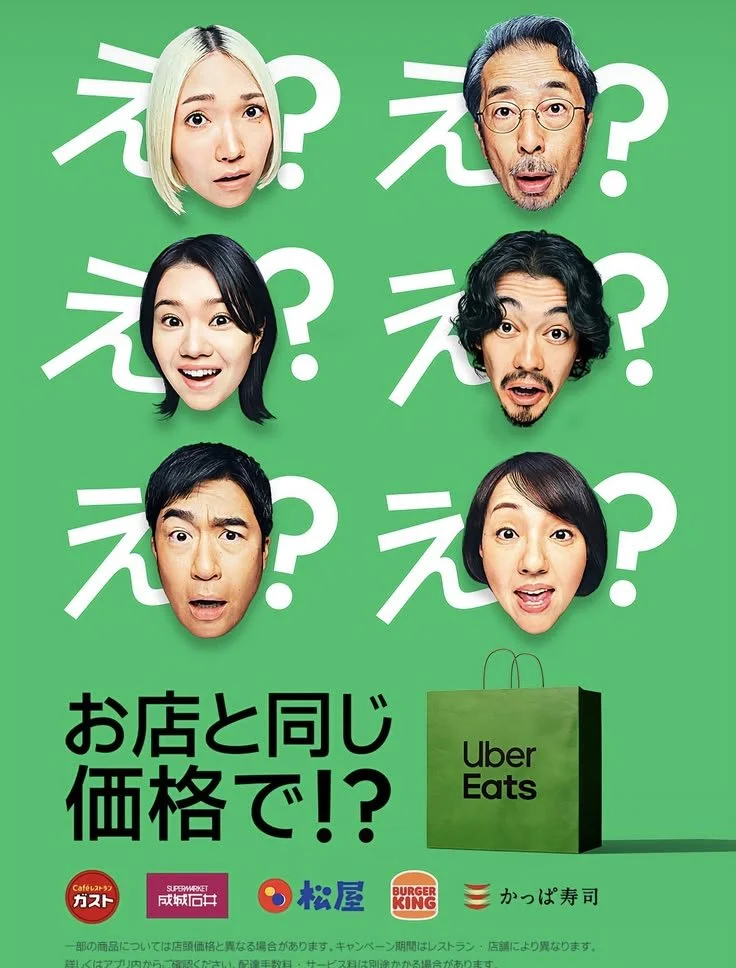
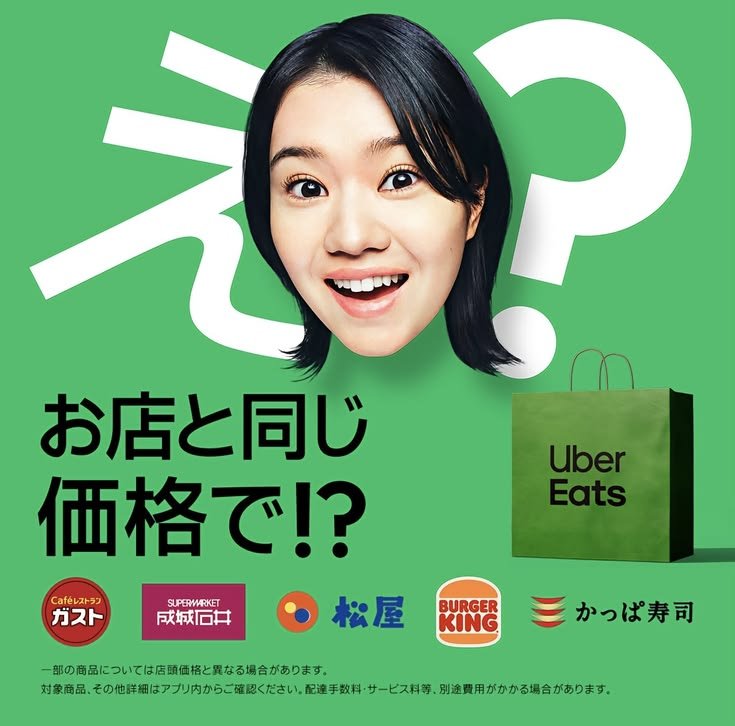
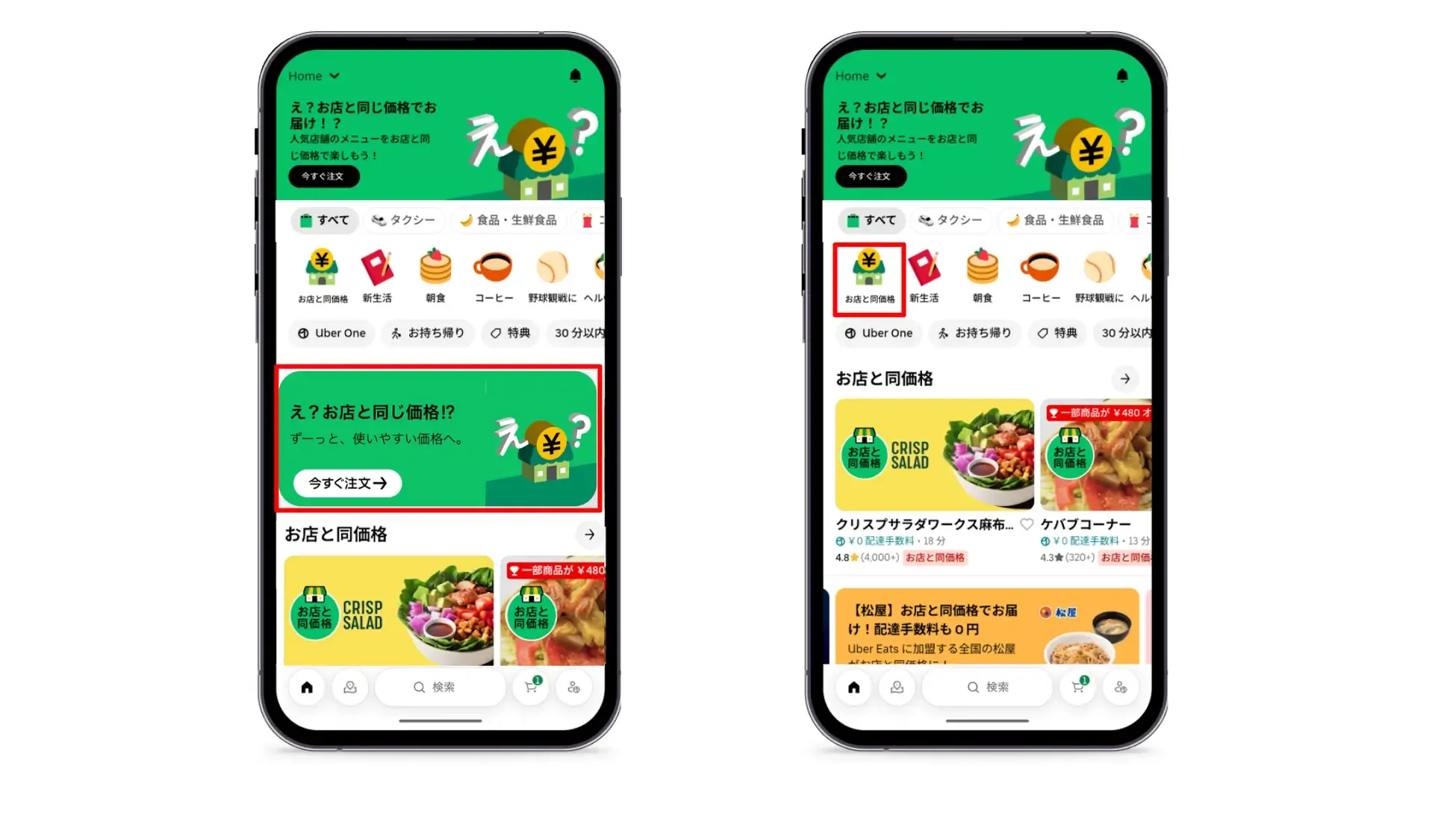
Merchant Partnership OOH

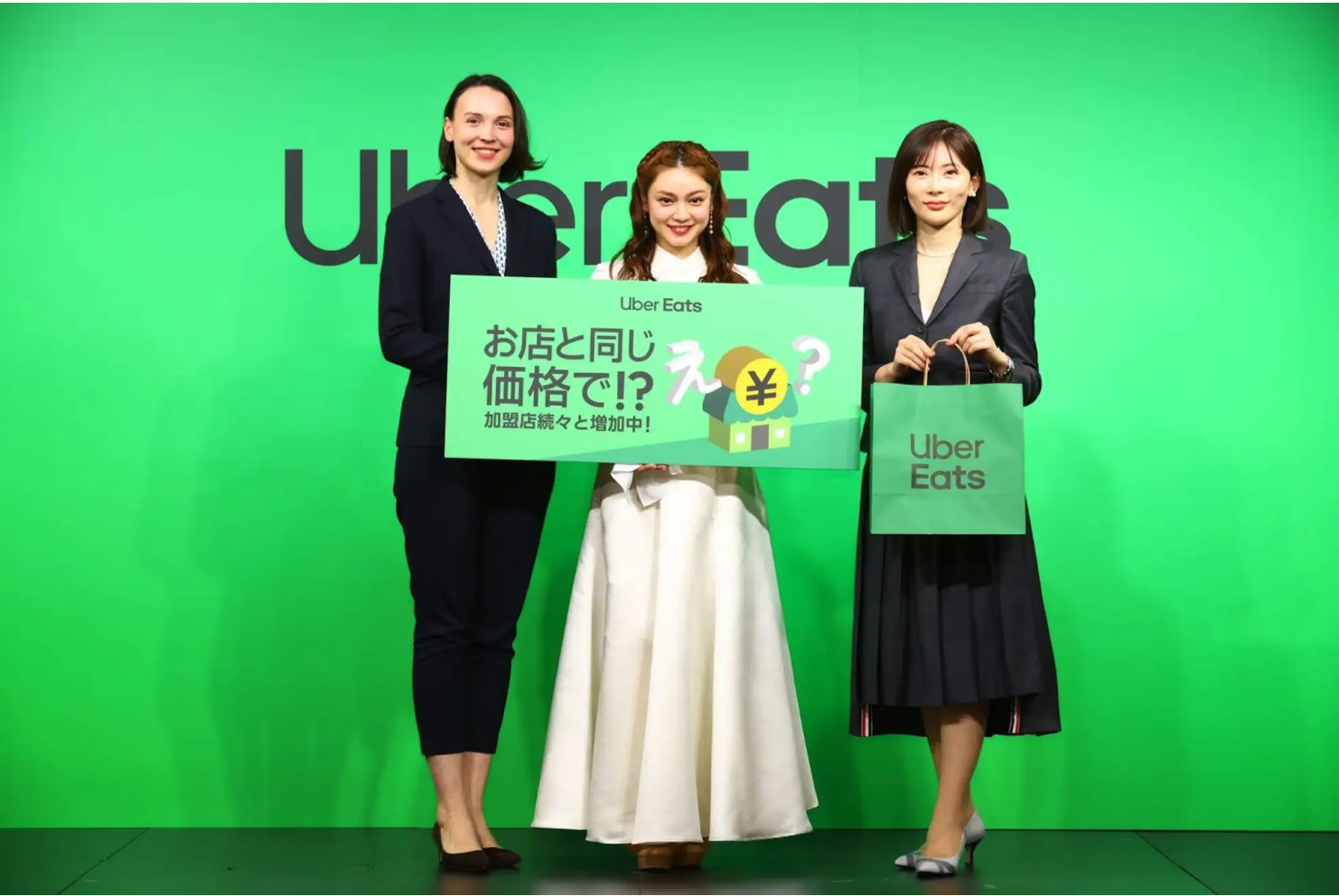
Media Coverage